

Last updated November 2026
Definitions & Concepts
What Is Altitude Illness?
Acute altitude illness is a group of syndromes caused by hypobaric hypoxia in people who ascend faster than they can acclimatize. Oxygen is still 21% of the air, but its partial pressure falls with barometric pressure: about half of sea-level oxygen at 5,500 m (18,000 ft) and a third on Everest.
- Acute mountain sickness (AMS): headache plus GI upset, fatigue or dizziness after a recent ascent. Common and usually self-limited.
- High-altitude cerebral edema (HACE): the severe end of AMS. Ataxia or altered mental status. Life-threatening.
- High-altitude pulmonary edema (HAPE): noncardiogenic pulmonary edema from exaggerated hypoxic pulmonary vasoconstriction. The most common cause of altitude-related death.
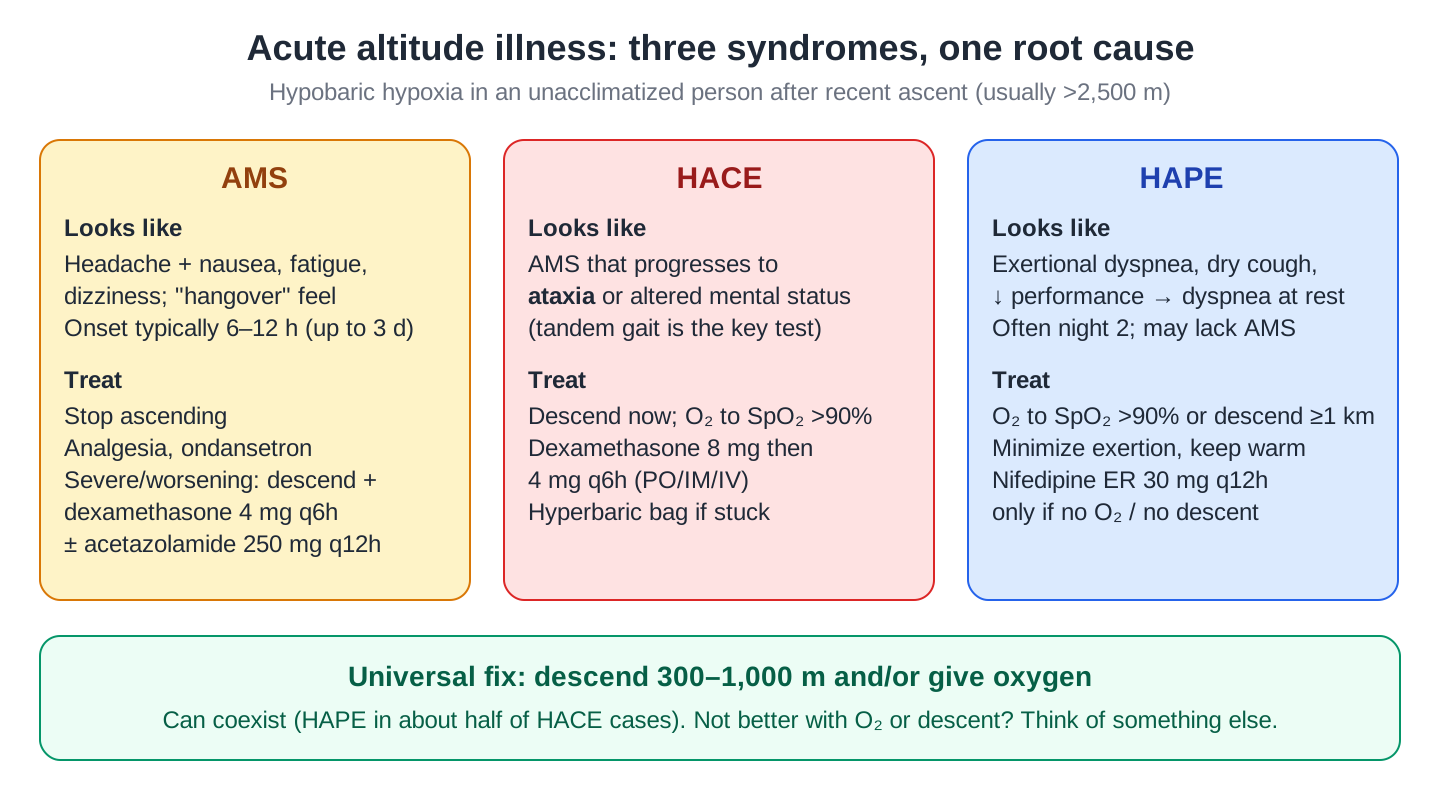
All three share one cause and one fix: descent and oxygen. If a patient doesn’t improve with either, look for another diagnosis.
Altitude Bands
Band | Elevation | What happens |
Intermediate | 1,500–2,500 m (5,000–8,000 ft) | Lower exercise capacity; AMS possible in susceptible people (from about 2,000 m) |
High | 2,500–3,500 m (8,000–11,500 ft) | Most cases happen here because ski towns and resorts let people sleep at this height |
Very high | 3,500–5,500 m (11,500–18,000 ft) | Marked hypoxemia with exercise and sleep; acclimatization needed |
Extreme | >5,500 m (>18,000 ft) | Deterioration outpaces acclimatization; no permanent habitation |
Sleeping altitude drives risk, not the highest point reached during the day. Hypoxemia is worst during sleep.
Who Gets It
- AMS affects roughly a quarter of visitors to Colorado resorts around 2,000–3,000 m, about 40% of Everest-region trekkers and up to 70% of Mount Rainier climbers, where ascent is fastest (Tintinalli 2020).
- Risk factors: fast ascent, high sleeping altitude, prior altitude illness (the strongest predictor; susceptibility is reproducible), living at low altitude, exertion and possibly obesity.
- Not protective: fitness. Fit people climb faster and get HAPE. Children are as susceptible as adults; people over 50 seem to get slightly less AMS.
- HAPE ranges from under 1 in 10,000 Colorado skiers to 2–3% of Denali climbers.
Pathophysiology
Acclimatization
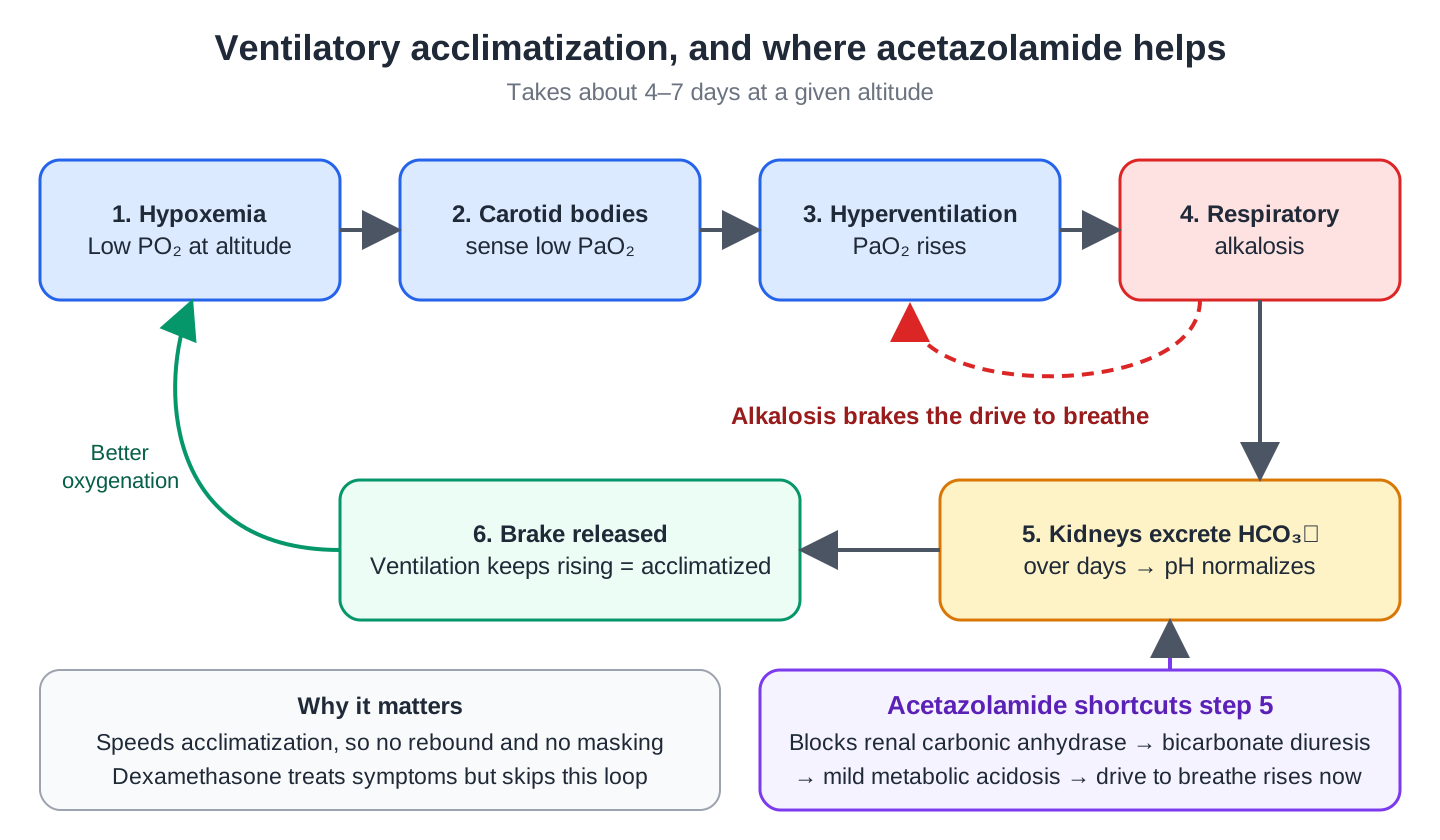
- Ventilation first: the carotid bodies sense hypoxemia and drive hyperventilation. The resulting respiratory alkalosis brakes that drive until the kidneys excrete bicarbonate over the next days. Ventilatory acclimatization takes about 4–7 days at a given altitude.
- Acetazolamide speeds this up. It blocks renal carbonic anhydrase, causing a bicarbonate diuresis and mild metabolic acidosis that lets ventilation rise.
- Fluids: a healthy response is diuresis and hemoconcentration. Fluid retention (antidiuresis) goes with AMS and peripheral edema.
- Blood: erythropoietin rises within hours, but red cell mass takes weeks and doesn’t matter for acute illness. 2,3-DPG shifts the oxyhemoglobin curve right while alkalosis shifts it left, so the net change is small (Goldfrank 2019; Tintinalli 2020).
- Sleep: periodic breathing with brief apneas is normal above about 2,700 m and improves with acclimatization or acetazolamide.
Altitude | Typical SaO2 (acclimatized) | PaCO2 (mm Hg) |
Sea level | 96% | 40 |
1,520 m (5,000 ft) | 95% | ~36 |
2,290 m (7,500 ft) | 92–93% | 31–33 |
4,570 m (15,000 ft) | 86% | 25 |
Adapted from Tintinalli 2020.
Normal SpO2 is lower at altitude. Compare a dyspneic patient’s saturation with that of healthy companions at the same elevation; HAPE typically runs 10–20 points lower.
AMS and HACE
- Everyone who ascends gets cerebral vasodilation and more cerebral blood volume. Why only some get symptoms is unclear.
- In HACE, the blood–brain barrier leaks and vasogenic edema appears, classically as T2 signal in the splenium of the corpus callosum on MRI. Dexamethasone works so well that vasogenic edema is thought to be central.
- AMS and HACE are a continuum. Coma can follow within about 12 hours of ataxia if untreated.
HAPE
- A noncardiogenic, high-pressure edema. Left ventricular function and wedge pressure are normal; pulmonary artery pressure is high and uneven, so some capillary beds are overperfused and leak.
- Susceptible people have a blunted hypoxic ventilatory response and exaggerated pulmonary vasoconstriction, so HAPE recurs.
- Anything causing pulmonary hypertension or abnormal pulmonary flow predisposes: intracardiac shunt (PFO, ASD), absent pulmonary artery and chronic thromboembolic disease. Cold, exertion and respiratory infection add risk.
- This is why pulmonary vasodilators (nifedipine, PDE-5 inhibitors) prevent HAPE, and why they do nothing for AMS.
HAPE at under 2,500 m, or HAPE that doesn’t improve quickly with oxygen, should prompt a search for PE, shunt or another anatomic cause.
Recognition and Diagnosis
AMS
- Setting: an unacclimatized lowlander who becomes ill within several hours to 3 days of ascent, usually above 2,500 m. AMS and even HAPE can occur from about 2,000 m, so don’t exclude them just because the patient is lower.
- Onset: typically 6–12 h after arrival, but can start within a few hours or as late as day 3 (Bärtsch 2013). Often worst on waking. Feels like a hangover.
- No exam finding or test confirms AMS. It’s a symptom diagnosis. A practical test: does the traveler feel ill, or have they had to cut back their activities?
- Headache (bifrontal, worse with exertion, bending or Valsalva) plus nausea or anorexia, fatigue or dizziness. Children may just vomit or be fussy; in preverbal children AMS is a diagnosis of exclusion.
- Exam is nonspecific. SpO2 correlates poorly with AMS. Peripheral and facial edema is common and should prompt a look for HAPE and HACE.
- Headache that clears within 10–15 minutes of oxygen supports AMS over migraine.
2018 Lake Louise AMS Score
AMS = recent ascent + headache + at least one other symptom, with a total score of 3 or more.
Symptom | Score |
Headache | 0 none · 1 mild · 2 moderate · 3 severe, incapacitating |
GI symptoms | 0 none · 1 poor appetite or nausea · 2 moderate nausea or vomiting · 3 severe, incapacitating |
Fatigue / weakness | 0 none · 1 mild · 2 moderate · 3 severe, incapacitating |
Dizziness / lightheadedness | 0 none · 1 mild · 2 moderate · 3 severe, incapacitating |
Severity | 3–5 mild · 6–12 moderate–severe (WMS); the score’s authors split 6–9 moderate and 10–12 severe |
The 2018 revision dropped sleep disturbance, which reflects altitude hypoxia rather than AMS (Roach 2018). Some textbooks still print the older five-item version. The score was built for research case-finding, so in the ED use it to describe severity, not as a cutoff.
The Lake Louise score grades symptoms; it doesn’t rule anything out. Ataxia or confusion means HACE regardless of the score.
HACE
- Ataxia or altered mental status after recent ascent, usually on a background of worsening AMS. Can also come from severe hypoxemia in HAPE (they coexist in about half of HACE cases).
- Test tandem (heel-to-toe) gait. Ataxia is often the earliest sign. Apathy, irritability and inability to care for oneself can be subtle early clues. Papilledema confirms cerebral edema.
- Optic nerve sheath diameter on ultrasound changes with altitude but isn’t reliable for diagnosing AMS or HACE.
- Raised ICP can cause focal signs (CN III or VI palsy), but true focal deficits should make you consider stroke, venous sinus thrombosis, hemorrhage or an unmasked mass.
- MRI: T2/FLAIR signal in the corpus callosum (especially the splenium), plus microhemorrhages on susceptibility-weighted imaging. Microhemorrhages can still be seen up to 10 years later, so MRI can confirm a past episode (Hackett 2019). Edema can look worse on MRI in the first week even as the patient improves.
HAPE
- Early: dry cough, reduced exercise performance, exertional dyspnea and slow recovery from exertion.
- Late: dyspnea at rest, tachycardia, tachypnea, low-grade fever, pink frothy sputum, cyanosis. The shift from exertional dyspnea to dyspnea at rest is the hallmark.
- Usually appears on the second night at a new altitude and worsens at night. AMS may or may not come first.
- Rales often start in the right mid-lung field; up to 15% have none at rest.
- ED workup: pulse oximetry, CXR and ECG. Hypoxemia plus unilateral or bilateral alveolar opacities in the right setting is enough to diagnose it. ECG may show right axis or RV strain.
- POCUS: B-lines are sensitive but not specific, and there’s no agreed B-line count.
- CT or echo only when the first workup is unrevealing or another diagnosis is still likely.
- Re-entry HAPE: a child or adult who lives at altitude, goes to low altitude and returns. A classic pediatric trap.
HAPE is easily mistaken for pneumonia. Fever and infiltrates in a patient who just arrived at altitude is HAPE until proven otherwise, and it improves dramatically with oxygen alone.
Differential and Mimics
Mimic | Clue |
Carbon monoxide | Heaters, stoves or tent cooking in mountain lodges and cabins; housemates sick too. Effects add to altitude hypoxia. Get a co-oximetry COHb |
Dehydration, exhaustion, hypothermia | Improves with fluids, rest and warming rather than oxygen |
Hypoglycemia, hyponatremia | Check a glucose and sodium in anyone confused at altitude. “Forced hydration” doesn’t prevent AMS and can cause hyponatremia |
Migraine, viral illness, hangover | History; altitude can trigger migraine in people prone to it |
Stroke, CVST, SAH, mass, meningitis, TBI | Focal deficits, seizures, persistent coma after descent |
Pneumonia, PE, pneumothorax, ACS, CHF, asthma | HAPE mimics; PE risk rises with dehydration, immobility and polycythemia |
PERC’s SpO2 cutoff of 95% isn’t valid at altitude. Altitude-adjusted thresholds have been proposed but aren’t validated, so use clinical gestalt and compare with local norms.
Treatment
Three rules: don’t go higher with symptoms, descend if symptoms don’t improve or worsen, and descend and treat immediately for HACE or HAPE. Descent is definitive, but it isn’t always possible or necessary.
Descent, Oxygen and Hyperbaric Bags
- A drop of only 300–1,000 m usually relieves symptoms. Evacuation to sea level is rarely needed.
- Oxygen: titrate to SpO2 above 90%, not to a set FiO2. Low-flow oxygen (1–2 L/min) for 2 h or more works far better than short high-flow bursts. Oxygen alone can resolve HAPE at altitude over 36–72 h.
- Oxygen bars and over-the-counter oxygen canisters have no role in prevention or treatment.
- Portable hyperbaric bag (e.g., Gamow bag): about 2 psi above ambient, roughly equal to descending 1,500 m. Needs constant tending and is hard for claustrophobic or vomiting patients; symptoms can recur on removal. A bridge, not a reason to delay descent.
- In HAPE, aim to descend at least 1,000 m and minimize exertion on the way down (vehicle, helicopter, or at least no pack). Keep the patient warm; cold raises pulmonary pressure.
- Never let a patient with HACE descend alone.
In a mountain-town ED with oxygen and a hospital nearby, many HAPE patients can be managed at altitude on oxygen without evacuation.
AMS
- Mild–moderate: stop ascending; staying at the same altitude is fine with close observation. Treat symptoms with nonopioid analgesia (acetaminophen or ibuprofen) and an antiemetic such as ondansetron 4–8 mg. Acetazolamide and dexamethasone usually aren’t needed. Most patients improve within 12–36 h.
- Descend if symptoms worsen or don’t improve after 1–3 days.
- Moderate–severe: dexamethasone 4 mg PO/IM/IV q6h (children 0.15 mg/kg q6h, max 4 mg) and/or acetazolamide 250 mg PO q12h (children 2.5 mg/kg q12h, max 250 mg). Either drug may help the patient walk down under their own power.
- Severe, worsening or not improving: descend, with dexamethasone strongly considered.
- Acetazolamide is better for prevention than treatment; only one small trial has studied it as treatment (Tapia 2019). Some travel-medicine references still advise 250 mg q12h for self-treatment.
- Dexamethasone doesn’t speed acclimatization, so don’t ascend further until symptom-free off it.
- Once symptoms resolve, ascent can resume, using prophylactic acetazolamide on the way up. Reascending with ongoing symptoms is contraindicated.
Avoid high-dose aspirin in anyone on acetazolamide. Acetazolamide’s acidemia pushes more salicylate into the brain (Goldfrank 2019), and the label warns of serious toxicity. For headache, use acetaminophen or ibuprofen.
HACE
- Descend now, or evacuate. Oxygen to SpO2 above 90%; hyperbaric bag if descent is delayed.
- Dexamethasone 8 mg PO/IM/IV once, then 4 mg q6h (children 0.15 mg/kg q6h, max 4 mg per dose).
- Acetazolamide can be added, but dexamethasone is the primary drug.
- If intubated, avoid hyperventilation: PaCO2 is already low and further lowering risks cerebral ischemia. No evidence supports hypertonic saline, mannitol or loop diuretics.
- Coma can persist for days to weeks after descent and still recover; persistent coma warrants a search for another cause.
- No reascent on the same trip after HACE.
HAPE
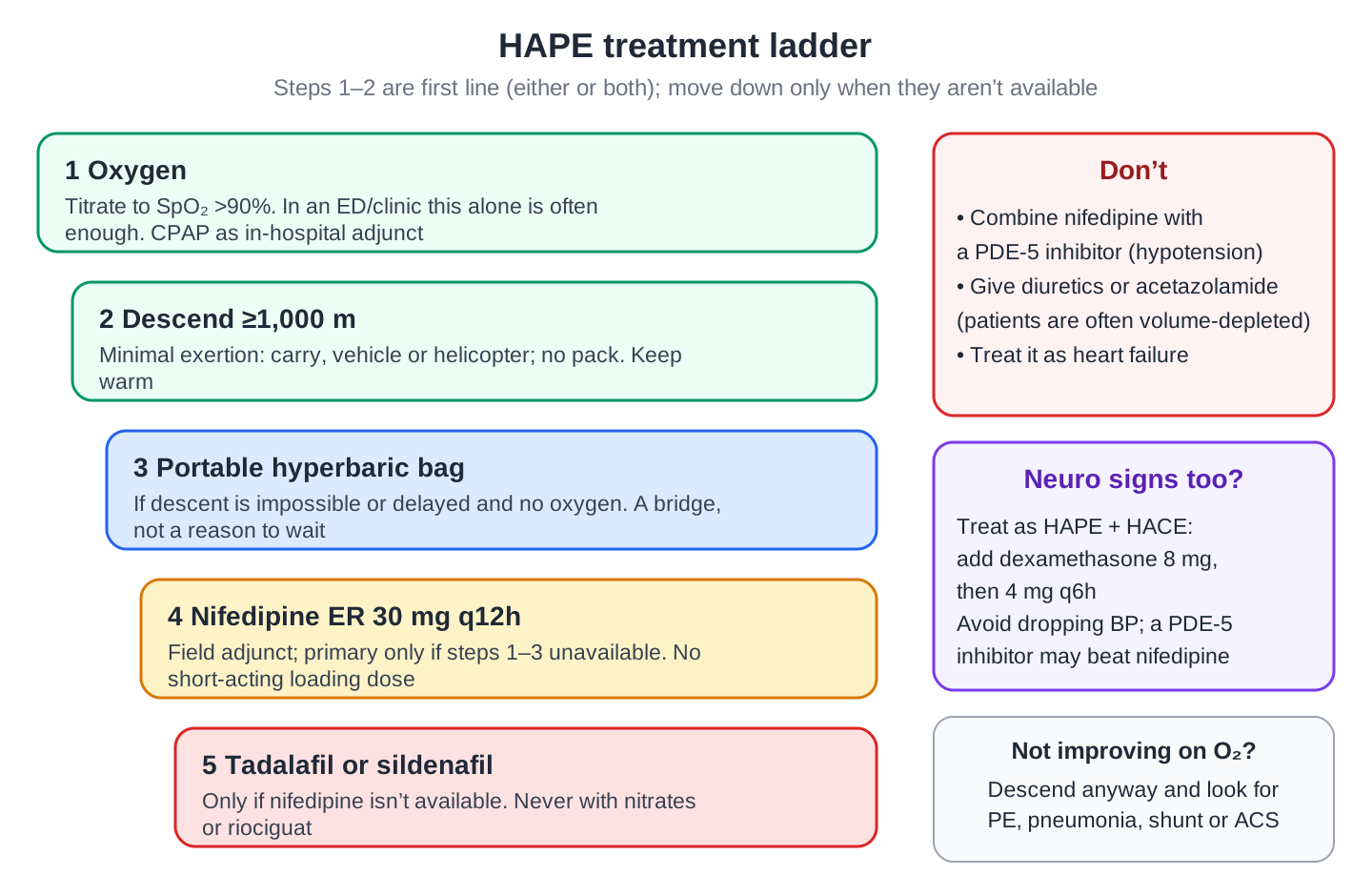
- Oxygen or descent first. Both work better than any drug. In a monitored setting (urgent care or ED), oxygen alone at the current altitude is often enough.
- Descend anyway if oxygenation doesn’t improve on oxygen (with or without CPAP), the patient worsens despite SpO2 above 90%, or they aren’t improving. Failure to improve suggests another diagnosis.
- Nifedipine ER 30 mg PO q12h (or 20 mg ER q8h) as a field adjunct, and as primary therapy only when oxygen, descent and a hyperbaric bag are all unavailable. In monitored settings it adds nothing to oxygen, so add it only if the patient isn’t responding. Skip the old short-acting loading dose; it risks hypotension, especially in volume-depleted patients.
- PDE-5 inhibitors (tadalafil, sildenafil): only if nifedipine isn’t available. Never combine pulmonary vasodilators (hypotension), and never give PDE-5 inhibitors with nitrates or riociguat.
- Evidence for nifedipine as treatment is one nonrandomized, unblinded study, and adding it to descent, oxygen and rest didn’t speed recovery.
- CPAP is a reasonable in-hospital adjunct to oxygen if mental status is normal and the patient tolerates the mask.
- Not recommended: diuretics or acetazolamide (both can drop BP in a volume-depleted patient). No evidence for beta-agonists or dexamethasone alone. Treat infection if present. Intubation is rarely needed.
- HAPE + HACE: add dexamethasone at HACE doses for any neurologic dysfunction that doesn’t clear quickly with oxygen. Avoid dropping BP (cerebral perfusion); a PDE-5 inhibitor may be preferred over nifedipine here.
- Reascend only once symptoms are gone and SpO2 is stable at rest and with mild exercise off oxygen and vasodilators.
HAPE is not heart failure. Furosemide can drop the blood pressure of an already dry patient and does nothing for the underlying problem.
Prevention
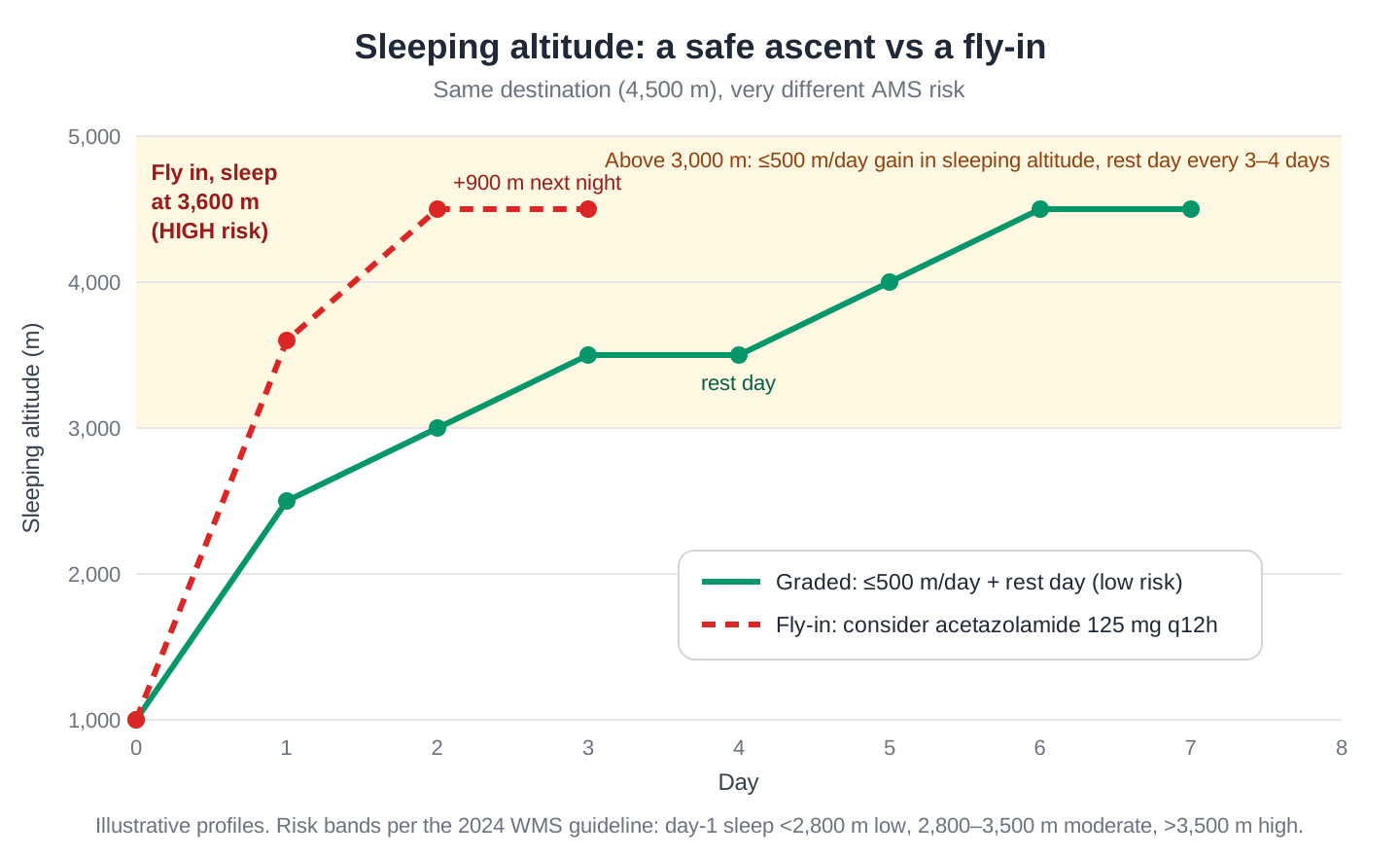
Graded ascent is the best prevention for all three syndromes. Above 3,000 m, don’t raise sleeping altitude by more than 500 m a day, and add a rest day every 3–4 days. Where terrain forces bigger jumps, add acclimatization days so the average over the trip stays under 500 m a day. A night at intermediate altitude (e.g., Denver, 1,600 m) before sleeping above 2,800 m helps. Avoid alcohol and sedatives early on.
Staged ascent (a few days at 2,200–3,000 m before going higher) also works; even 2 days at 3,000 m helps. Pre-acclimatization in hypoxia has mixed results and only long exposures (more than 8 h a day for more than a week) are likely to help. Home hypoxic tents shouldn’t be relied on.
Risk Assessment
The highest column that applies sets the risk. It assumes the trip starts below 1,200 m.
Factor | Low | Moderate | High |
Prior altitude illness | None or mild AMS | Moderate–severe AMS | HAPE or HACE |
Sleeping elevation on day 1 | Under 2,800 m | 2,800–3,500 m | Over 3,500 m |
Ascent rate above 3,000 m | Up to 500 m/day, with an extra day every 1,000 m | More than 500 m/day, with an extra day every 1,000 m | More than 500 m/day without extra days |
Adapted from the 2024 WMS guideline (Figure 1). It’s a practical tool that hasn’t been validated in studies. Low risk needs no drugs; consider them for moderate or high risk, on top of graded ascent.
Drug | Use | Adult dose | Notes |
Acetazolamide | AMS/HACE prevention (preferred) | 125 mg PO q12h; consider 250 mg q12h for high-risk ascents up to 5,000 m. Children 1.25 mg/kg q12h (max 125 mg) | 62.5 mg q12h is less effective. Continue 2 days at the target altitude (2–4 days if ascending faster than recommended). Stop when descent begins |
Dexamethasone | AMS/HACE prevention (alternative) | 2 mg q6h or 4 mg q12h | For adults with acetazolamide allergy or intolerance. 4 mg q6h only for airlifted rescue or military teams working above 3,500 m. Not for children. No taper needed if used 5–7 days or less |
Ibuprofen | AMS prevention (second line) | 600 mg PO q8h | Only if acetazolamide and dexamethasone can’t be used. The most recent trial found it inferior to acetazolamide |
Nifedipine ER | HAPE prevention, only if prior HAPE | 30 mg q12h or 20 mg q8h | Continue 4 days at the highest altitude (up to 7 if ascending fast) or until descent |
Tadalafil | HAPE prevention (alternative) | 10 mg q12h | If nifedipine isn’t an option. Dexamethasone 8 mg q12h is a third-line alternative |
All drugs start the day before ascent; starting on the day of ascent still helps. Doses follow the 2024 WMS guideline. Combining acetazolamide and dexamethasone for prevention is reserved for rescue teams and climbers who must ascend rapidly above 3,500 m and work on arrival.
Recommended against for prevention: acetaminophen, ginkgo, inhaled budesonide, salmeterol and hypoxic tents. Coca products, oxygen bars and canisters, iron and over-the-counter supplements are unproven, so don’t substitute them for proven measures. Forced hydration doesn’t help and risks hyponatremia.
Acetazolamide hasn’t been shown to prevent HAPE in people with a prior episode. In a small RCT (n = 13), HAPE occurred in 43% on acetazolamide vs 67% on placebo, not significant, and pulmonary artery pressure didn’t fall (Berger 2022). WMS recommends against relying on it, though it may prevent re-entry HAPE.
The Evidence for Acetazolamide
- In meta-analyses of placebo-controlled trials, prophylaxis cuts AMS risk by roughly half (48% relative risk reduction, Ritchie 2012; RR 0.47, Cochrane 2017), with no clear dose–response. 125 mg q12h works, and higher doses mostly add side effects (Low 2012).
- The number needed to treat is about 6 for climbers and lower for fast ascent by plane or car, where baseline risk is about 60% (Kayser 2012).
- Ibuprofen: in the HEAT trial in Nepal (n = 265), altitude headache occurred in 27.5% on ibuprofen 600 mg TID, 27.1% on acetazolamide 85 mg TID and 45.3% on placebo (Gertsch 2010). In a head-to-head RCT (n = 92), AMS occurred in 62.2% on ibuprofen vs 51.1% on acetazolamide 125 mg BID, so ibuprofen failed noninferiority (Burns 2019). All ibuprofen trials lasted only 24–48 h, so longer-term GI and kidney safety at altitude is unknown.
- 62.5 mg is too low: in an RCT (n = 106), AMS occurred in 55% on 62.5 mg BID vs 45% on 125 mg BID, failing noninferiority, after an earlier small study had suggested equivalence (Lipman 2020).
- Dexamethasone prophylaxis gets a strong WMS recommendation, but the Cochrane review rated the evidence low quality (RR 0.60, 95% CI 0.36–1.00). Side effects include hyperglycemia, mood change and dyspepsia, and adrenal suppression with longer use (Tang 2014; Cochrane 2017).
- Nifedipine prevented recurrent HAPE in mountaineers with a prior episode (1 of 10 vs 7 of 11 on placebo) during rapid ascent to 4,559 m (Bärtsch 1991).
Acetazolamide works by speeding acclimatization, so it doesn’t mask developing illness and there is no rebound when it stops.
Acetazolamide Side Effects and Cautions
- Common: paresthesias, polyuria, and flat-tasting carbonated drinks (it inhibits carbonic anhydrase on the tongue). More frequent at higher doses.
- Labs: causes a non-anion-gap metabolic acidosis and hypokalemia (Goldfrank 2019). Expect a low bicarbonate in a patient taking it.
- Sulfa allergy: acetazolamide is a nonantibiotic sulfonamide and the risk of reaction is extremely low (Kelly 2010). Prior anaphylaxis or SJS to a sulfonamide is a contraindication; otherwise consider a supervised trial before the trip, especially before remote travel.
- Exercise: at usual doses, any effect on performance is small and unlikely to matter.
- Contraindications (label): hyponatremia, hypokalemia, marked kidney or liver disease (including cirrhosis), adrenal insufficiency and hyperchloremic acidosis.
- Interactions: high-dose salicylates; other carbonic anhydrase inhibitors such as topiramate or zonisamide (stones, acidosis); lithium; cyclosporine; and more hypokalemia with loop or thiazide diuretics.
- Pregnancy and breastfeeding: weigh risks against benefits; the limited lactation data are reassuring.
- Label vs guideline dose: the FDA label lists 500–1,000 mg/day for altitude sickness. The WMS dose of 125 mg q12h is lower on purpose, based on dose-finding trials.
Special Populations
- COPD or baseline hypoxemia: may need oxygen at altitude. To deliver the same PO2, scale the FiO2 by the ratio of low-altitude to high-altitude barometric pressure.
- Heart disease: healthy hearts tolerate hypoxia well. Stable CAD patients may get angina with less exertion in the first days. In heart failure, individualize diuretics: altitude can cause fluid retention, but hypoxic diuresis can also cause dehydration. Patients with advanced heart failure, pulmonary hypertension or a recent cardiac event need specialist advice before going high.
- Hypertension: blood pressure rises modestly; not a contraindication. Keep taking medications.
- Sickle cell disease: even airline cabin altitude can trigger a crisis in HbSS, HbSC or S-thal; needs oxygen. Left upper quadrant pain at altitude suggests splenic infarction, which can happen even with sickle trait.
- Pregnancy: short stays at resort altitudes appear safe in low-risk pregnancies. Avoid sleeping altitudes where SpO2 falls below 85% (about 3,000 m) and remote areas without obstetric care.
- After COVID-19: most people recover fully. Evaluate before high-altitude travel if symptoms persist 2 weeks or more after infection or hospital discharge, or after an ICU stay, myocarditis or thromboembolism. Workup: pulse oximetry at rest and with exertion, PFTs, CXR, ECG, BNP, high-sensitivity troponin and echo.
Disposition and Follow-Up
Clinical Course | Disposition |
Mild–moderate AMS that improves with treatment, reliable patient | Discharge: no further ascent until symptom-free, ascent plan, return precautions for ataxia or dyspnea at rest |
HAPE with SpO2 above 90% on oxygen, reliable companions and suitable lodging | Discharge on oxygen at altitude, or descend. Admit if symptoms or saturation worsen on oxygen |
HACE; ataxia or confusion that persists after descent; HAPE not quickly improving; HAPE below 2,500 m | Admit, and work up alternative diagnoses (CT/MRI, PE, shunt) |
Coma, respiratory failure or shock | ICU |
- Discharge HAPE patients once they’re clinically and radiographically improving with SpO2 above 90% (or PaO2 60 mm Hg).
- A previous episode doesn’t bar future trips; a slower ascent or lower target may avoid a repeat. Counsel on slow ascent, early symptoms and prophylaxis: acetazolamide for AMS/HACE, and nifedipine (not acetazolamide) after HAPE.
TL;DR
Topic | Bottom line |
Diagnosis | Clinical: feels ill within hours to 3 days of ascent. Ataxia means HACE; dyspnea at rest means HAPE. Check glucose, sodium and CO |
Universal treatment | Stop ascending; descend 300–1,000 m and/or oxygen to SpO2 above 90% |
AMS | Mild–moderate: stop ascending, analgesia + antiemetic; consider dexamethasone 4 mg q6h and/or acetazolamide 250 mg q12h. Severe or worsening: descend + dexamethasone |
HACE | Descend + dexamethasone 8 mg then 4 mg q6h |
HAPE | Oxygen to SpO2 above 90% or descend at least 1,000 m; nifedipine ER only without them; no diuretics or acetazolamide |
Prevention | Slow ascent (≤500 m/day sleeping gain above 3,000 m); acetazolamide 125 mg q12h from the day before for moderate/high risk; nifedipine only after prior HAPE |
Mimics | CO poisoning, PE, pneumonia, stroke: think of them when oxygen or descent doesn’t help |
Sources
- Davis C, Eifling KP. High-altitude disorders. In: Tintinalli JE, et al., eds. Tintinalli’s Emergency Medicine: A Comprehensive Study Guide. 9th ed. McGraw-Hill; 2020: Ch. 216.
- Nelson LS, Howland MA, Lewin NA, et al., eds. Goldfrank’s Toxicologic Emergencies. 11th ed. McGraw-Hill; 2019: Ch. 12 (Fluid, Electrolyte, and Acid–Base Principles), Ch. 28 (Respiratory Principles), Ch. 37 (Salicylates), Ch. 122 (Carbon Monoxide).
- Luks AM, Beidleman BA, Freer L, et al. Wilderness Medical Society clinical practice guidelines for the prevention, diagnosis, and treatment of acute altitude illness: 2024 update. Wilderness Environ Med. 2024;35(1 suppl):2S-19S. doi:10.1016/j.wem.2023.05.013
- Roach RC, Hackett PH, Oelz O, et al. The 2018 Lake Louise Acute Mountain Sickness Score. High Alt Med Biol. 2018;19:1-4. doi:10.1089/ham.2017.0164
- Ritchie ND, Baggott AV, Todd WTA. Acetazolamide for the prevention of acute mountain sickness: a systematic review and meta-analysis. J Travel Med. 2012;19:298-307. doi:10.1111/j.1708-8305.2012.00629.x
- Low EV, Avery AJ, Gupta V, et al. Identifying the lowest effective dose of acetazolamide for the prophylaxis of acute mountain sickness: systematic review and meta-analysis. BMJ. 2012;345:e6779. doi:10.1136/bmj.e6779
- Kayser B, Dumont L, Lysakowski C, et al. Reappraisal of acetazolamide for the prevention of acute mountain sickness: a systematic review and meta-analysis. High Alt Med Biol. 2012;13:82-92. doi:10.1089/ham.2011.1084
- Gertsch JH, Corbett B, Holck PS, et al. Acetazolamide versus ibuprofen for prophylaxis against high altitude headache: the Headache Evaluation at Altitude Trial (HEAT). Wilderness Environ Med. 2010;21:236-243. doi:10.1016/j.wem.2010.06.009
- Bärtsch P, Maggiorini M, Ritter M, et al. Prevention of high-altitude pulmonary edema by nifedipine. N Engl J Med. 1991;325:1284-1289. doi:10.1056/NEJM199110313251805
- Tang E, Chen Y, Luo Y. Dexamethasone for the prevention of acute mountain sickness: systematic review and meta-analysis. Int J Cardiol. 2014. doi:10.1016/j.ijcard.2014.03.019
- Nieto Estrada VH, Molano Franco D, Medina RD, et al. Interventions for preventing high altitude illness: Part 1. Commonly-used classes of drugs. Cochrane Database Syst Rev. 2017;6:CD009761. doi:10.1002/14651858.CD009761.pub2
- Burns P, Lipman GS, Warner K, et al. Altitude sickness prevention with ibuprofen relative to acetazolamide. Am J Med. 2019;132(2):247-251. doi:10.1016/j.amjmed.2018.10.021
- Lipman GS, Jurkiewicz C, Burnier A, et al. A randomized controlled trial of the lowest effective dose of acetazolamide for acute mountain sickness prevention. Am J Med. 2020;133(12):e706-e715. doi:10.1016/j.amjmed.2020.05.003
- Berger MM, Sareban M, Schiefer LM, et al. Effects of acetazolamide on pulmonary artery pressure and prevention of high-altitude pulmonary edema after rapid active ascent to 4,559 m. J Appl Physiol. 2022;132(6):1361-1369. doi:10.1152/japplphysiol.00806.2021
- Bärtsch P, Swenson ER. Acute high-altitude illnesses. N Engl J Med. 2013;368(24):2294-2302. doi:10.1056/NEJMcp1214870
- Hackett PH, Yarnell PR, Weiland DA, Reynard KB. Acute and evolving MRI of high-altitude cerebral edema: microbleeds, edema, and pathophysiology. AJNR Am J Neuroradiol. 2019;40(3):464-469. doi:10.3174/ajnr.A5897
- Derstine M, Small E, Davis AM. Prevention, diagnosis, and treatment of acute altitude illness. JAMA. 2024;332(19):1665-1666. doi:10.1001/jama.2024.19562
- Tapia L, et al. Acetazolamide for the treatment of acute mountain sickness. Medwave. 2019. doi:10.5867/medwave.2019.11.7736
- Kelly TE, Hackett PH. Acetazolamide and sulfonamide allergy: a not so simple story. High Alt Med Biol. 2010;11:319-323. doi:10.1089/ham.2010.1051
- CORE EM. Acute Mountain Sickness. 2018.
- emDocs. EM@3AM: Altitude Sickness. 2017.
- emDocs. High Altitude Pulmonary Edema: Diagnosis, Management, and Preventive Strategies. 2015.
- LITFL. High Altitude Illness. 2019.
- LITFL. Pharm 101: Acetazolamide. 2020.
- CanadiEM. CRACKCast E144: High-Altitude Medicine. 2018.
- Pediatric EM Morsels. High Altitude Illness. 2019.
- REBEL EM. Altitude-Adjusted PERC. 2017.
- EM Cases. Global EM: Bringing Medical Care to the High Himalayas. 2026.
This post is educational and not medical advice.