LBBB and Sgarbossa
Insert image: 01_LBBB_ECG.jpg
The Original Sgarbossa Criteria (1996)
Sgarbossa et al., NEJM 1996: derived from patients in the GUSTO-1 trial who had LBBB and confirmed acute MI. It's the classic way to find an MI hiding behind a LBBB.
Why you need it: LBBB already distorts the ST segments. Every lead is expected to show appropriate discordance, meaning the ST segment and T wave point opposite to the main QRS deflection. That baseline STE in V1-V3 can mask a real STEMI or mimic one.
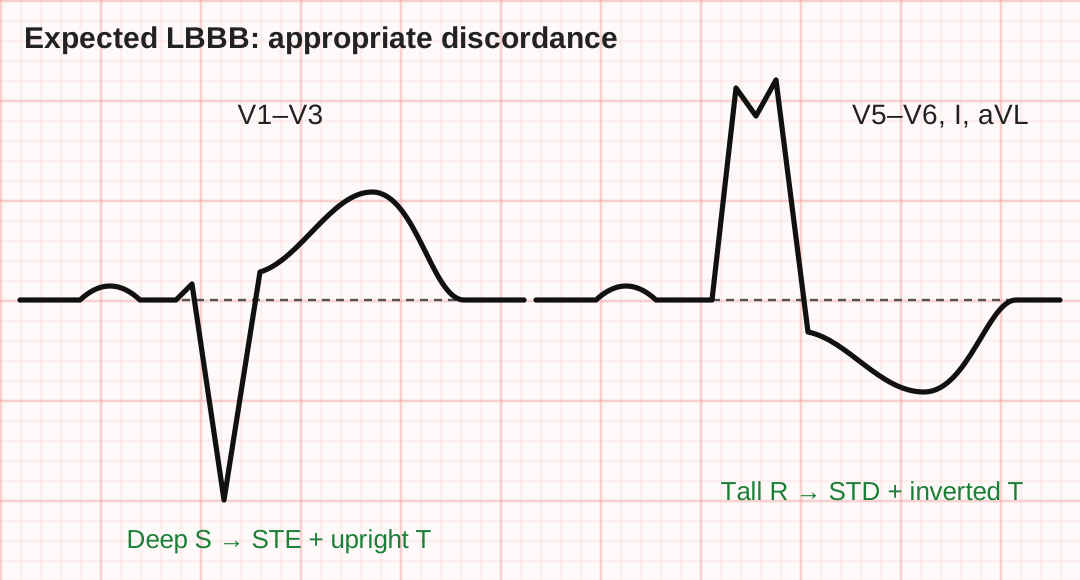
Sgarbossa looks for findings that break this rule (concordance) or are too big to blame on the LBBB (excessive discordance).
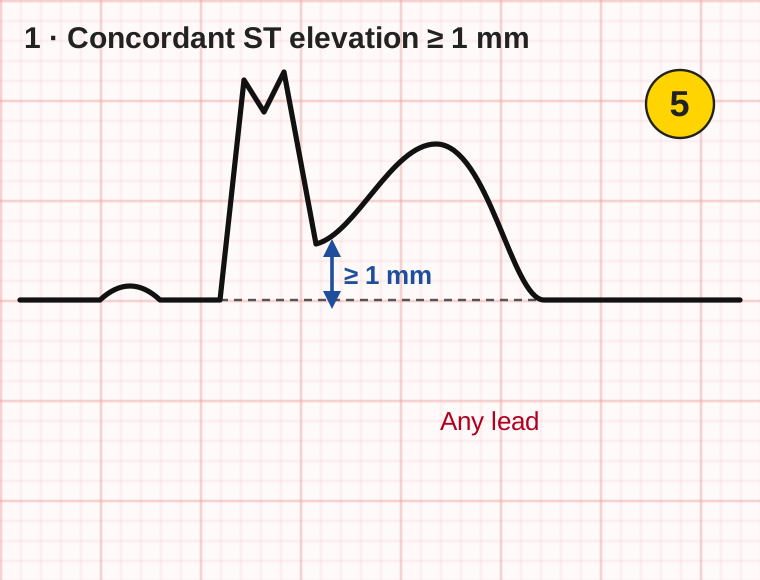
5 points. STE ≥ 1 mm in any lead where the QRS is positive.
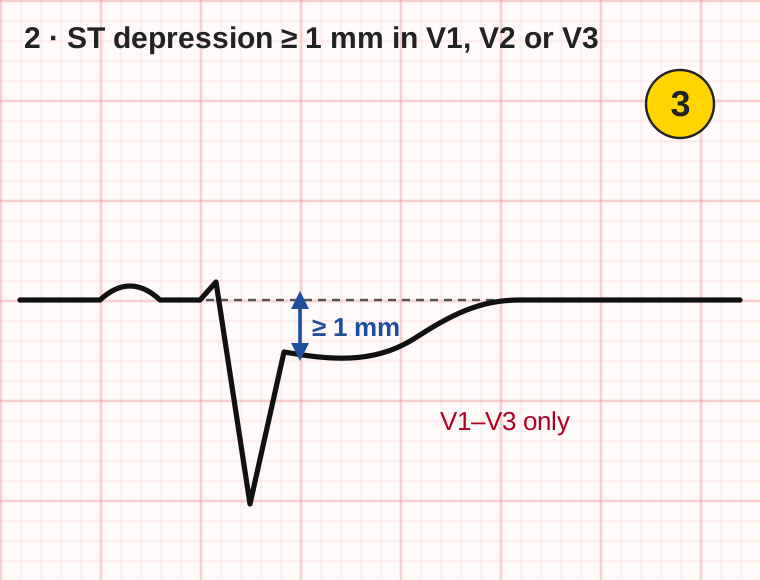
3 points. STD ≥ 1 mm in V1, V2 or V3 (QRS is negative there). Think posterior MI.
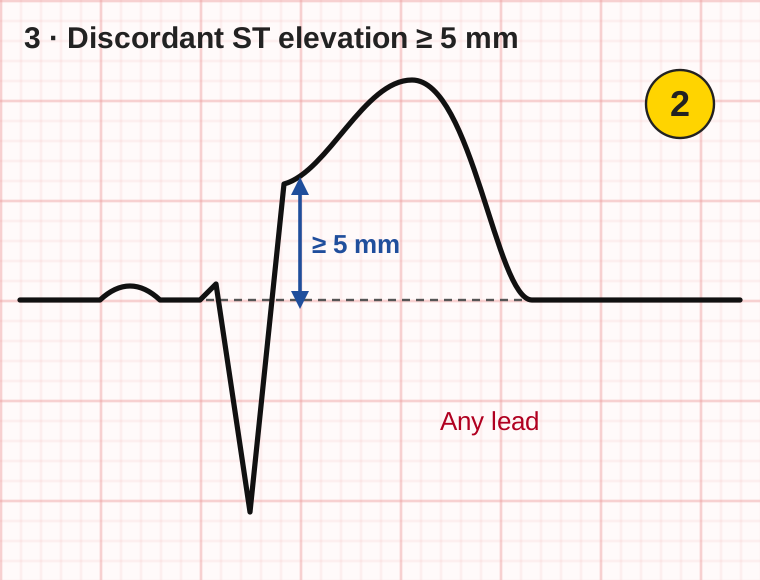
2 points. STE ≥ 5 mm in any lead where the QRS is negative.
Scoring
- ≥ 3 points = positive for acute MI
- This means you need criterion 1 or 2. Excessive discordant STE (2 points) alone is not enough
- Highly specific (~90-98%) but poorly sensitive (~20-35%). A positive score rules MI in; a negative score does not rule it out
- The same criteria are also used for ventricular paced rhythms
- The weak link is criterion 3. Smith-modified Sgarbossa swaps the fixed 5 mm cutoff for an ST/S ratio (STE ≥ 25% of the preceding S wave depth), which raises sensitivity to ~80-90% without losing much specificity
LBBB - Is this an MI?
Insert image: 04_LBBB_MI_case1.jpg
Insert image: 05_LBBB_MI_case2.jpg
Insert image: 06_LBBB_MI_case3.png
A Patient with an LVAD
A 65 y/o M with a hx of CHF s/p AICD, LVAD placement p/w unresponsive. RR 30, O2sat 89%.
Insert image: 07_LVAD_device.png
Patient feels dizzy. His MAP is 60 and the LVAD controller reads: Low Flow and High Power.
A Case of Respiratory Distress
60 yo M with hx of HTN BIBEMS for respiratory distress.
- HR 130 (sinus)
- BP 280/150
- RR 40, O2sat 88%
- Tripoding, retracting, diaphoretic
- Crackles
- No LE edema
Insert image: 13_lung_US_B_lines.gif
The patient develops severe abdominal pain. You learn he came straight from the airport after an international flight…
Insert image: 14_CT_body_packer.jpg
The monitor goes off.
Insert image: 15_ECG_cocaine_wide_complex.jpg
A Case of Chest Pain Radiating to the Back
58 year old male with history of HTN presents with acute severe chest pain radiating to his back while running to catch the bus. His blood pressure is 230/140 and his heart rate is 115.
A Case of Leg Pain
A 50-year-old female presents to the emergency department with acute onset of severe pain and swelling in her left leg. She recently had knee surgery a week ago.
- Leg is swollen with blue discoloration
- Pulses cannot be palpated
- She has minimal distal sensation
Insert image: 16_leg_phlegmasia.png
A Case of Palpitations
Insert image: 17_ECG_SVT.jpg
A Case of Palpitations and Shortness of Breath
Insert image: 18_ECG_sinus_tach.jpg
BP drops to 70/50. The patient is diaphoretic and syncopizes. Repeat ECG:
Insert image: 20_ECG_massive_PE.jpg
A Case of Syncope
Insert image: 23_ECG_WPW.png
The monitor goes off…
Insert image: 24_ECG_preexcited_AF.png
Found Sleeping in the Subway Station
Insert image: 25_ECG_hypokalemia.jpg
The monitor goes off.
Insert image: 26_ECG_torsades.jpg
Palpitations and Urinary Retention
Insert image: 27_ECG_hyperkalemia.jpg
You get a call from telemetry…
Insert image: 28_ECG_hyperkalemia_wide.jpg
This post is for education and not medical advice.